

Heavy Rain (Dutch)
E3 2006
Quantic Dreams, maker van onder andere Fahrenheit showde ons de laatste E3 hun nieuwe avontuur: "Heavy Rain". Op de E3 konden we de Techdemo zien die "The casting" heet. Hierin zien we hoe een reallife actrice maar dan omgezet in 3D animatie auditie doet voor een rol in Heavy Rain. Verder laat Quantic Dreams ons zien
hoe zei denken over next gen, naast erg veel polygonen zijn ook de emoties van groot belang. Kijk het filmpje en be impressed.
Het persbericht
Aangezien ik deze nog niet in het nederlands heb kunnen vinden zal ik hem voor jullie vertalen:
"Quantic Dream, de winnaar van meerdere awards en ontwikkelaar van Indigo Prophecy, Fahrenheit bij ons. Heeft de afgelopen Electronic Entertainment Expo in Los Angeles een nieuwe titel genaam "Heavy Rain" bekendgemaakt en presenteerd ons een real-time demo op het next generation systeem van Sony.
De demo heet "The Casting", hierin zien we een jonge actrice die bij de casting van het spel aanwezig is. Het bijzondere is dat we deze acteur in 3D emoties zien uitdrukken en in real time 3D huilt.
Ons doel was niet alleen om de acteur erg te laten lijken maar ook om diens hele manier van acteren goed over te zetten, in het bijzonder hoe deze op emotioneel vlak op dingen reageerde.
Bij Quantic Dream geloven wij dat de emotie een zeer belangrijke onderdeel van de volgende generatie spellen zal zijn. En wij investeren veel in technologieën om Virtuele acteurs en actrices op een zo realistisch mogelijke manier neer te zetten. Door de hoeveelheid aan emoties uit te breiden in videogames kunnen we ze toegankelijk maken voor een breder publek en verder de gamer meer meeslepen in het verhaal."
Het spel
Erg veel is er nog niet bekend over het spel, Quantic Dream wil ons nog niet vertellen waarover het verhaal gaat of waar en wanneer het zich zal afspelen. Wel is bekend dat ze, hoewel de game alleen voor de PS3 werd geshowd, ook op de Xbox360 en pc zal uitkomen. Verder is het plan van Quantic Dream om van Heavy Rain een Saga te maken. De game moet in het derde kwartaal van 2008 uitkomen.
Misschien wel de belangrijkste informatie die Quantic Dream heeft laten vallen is dat het spel een soort interactieve film wordt. Een zwarte thriller met volwassen thema's, scenes en hoog realistisch gehalte. Dit
willen ze bereiken door realistische situatie's en het gebruik van echte acteurs zodat de speler helemaal meegesleept wordt. Verder zullen de omgevingen nu helemaal interactief worden om zo ook het realisme weer te verhogen.
De game zal net als Fahrenheit c.a. 10 uur duren, maar de replay waarde zal veel hoger liggen doordat er nu heel verschillende eindes maar ook hele verschillen in het verhaal mogelijk zijn. Daardoor hopen ze de speler
te stimuleren het spel nog een keer te spelen en dat die dan ook echt een andere ervaring heeft als de eerste keer.
Autor: ormagon
Source: Gamez.nl
Language: Dutch
Labels: E3 2006, Gamez.nl, Heavy Rain the Origami Killer (Dutch)
 Friday, July 14, 2006
E3 2006: Подробности Heavy Rain
need translation?10 мая 2006 год – Sony активно демонстрирует свои игры в рамках E3 2006. Среди них и новый проект компании Quantic Dreams «Heavy Rain». Давайте подойдём поближе. Миновав толпу зевак нас поджидает лёгкое разочарование. Увы, но поиграть в игру нам так и не удастся. Все, что мы видим на стенде лишь демонстрация технических возможностей движка. Зато, каких возможностей!
Хватит и нескольких секунд, чтобы понять насколько детально, разработчики продумали лицевую анимацию в игре. Во время разговора героини, каждая мышца двигается самым естественным образом. Когда она поднимает глаза, сморщиваются брови, когда она улыбается, появляются характерные складки на лице.
Поговорим об окружении: всё выглядит очень и очень реалистично. Стеклянная посуда преломляет и отражает свет. В дальнем углу виден свойственный блеск металлической кастрюли. Каждый предмет дополняет другой, создавая нужную атмосферу помещения. Посмотрите на скриншоты, и вы поймёте наш восторг.
Тем временем мы видим резкую смену настроения у героини. Демонстрация буквально заставляет нас верить в происходящее на экране. Она встает и направляется в другую часть комнаты, в её руке виден револьвер. Буквально через несколько секунд, героиня приставляет револьвер к виску. Спустя некоторое время напряжение спадает. Теперь можно выдохнуть и протереть салфеткой влажный лоб. Всё говорит о том, что разработчики из Quantic Dreams действительно всерьёз взялись за жанр интерактивного кино.
«Наша цель состояла в том, чтобы показать не только образ жизни человека, но и его эмоции, его особенность» говорит Дэвид Кейдж (David Cage), основатель Quantic Dreams и директор Heavy Rain. «В Quantic Dreams полагают, что эмоции станут ключевым компонентом многих игр следующего поколения, поэтому мы и вкладываем капитал для создания действительно виртуальных актёров. Расширять диапазон эмоций в играх, значит расширять аудиторию игры. Наша демонстрация всего лишь начало, точка отсчёта, но я надеюсь, что мы привлекли к себе внимание и многие последуют за нами.
Движок Heavy Rain поддерживает
* Детальную анимацию лица (глаза, язык и т.д.)
* Слёзы в режиме реального времени
* Морщины на лице в режиме реального времени
* Продвинутые оттенки кожи.
Напомним, что игру разрабатывают сразу под три платформы PS3, Xbox360 и PC.
Autor:HELLHAMMER
Source: GameMAG
Language: Russian
Labels: E3, E3 2006, Heavy Rain, Russian, Sony
E3 Panel: Top Designers Tackle the Challenges of Interactive Narrative
need translation?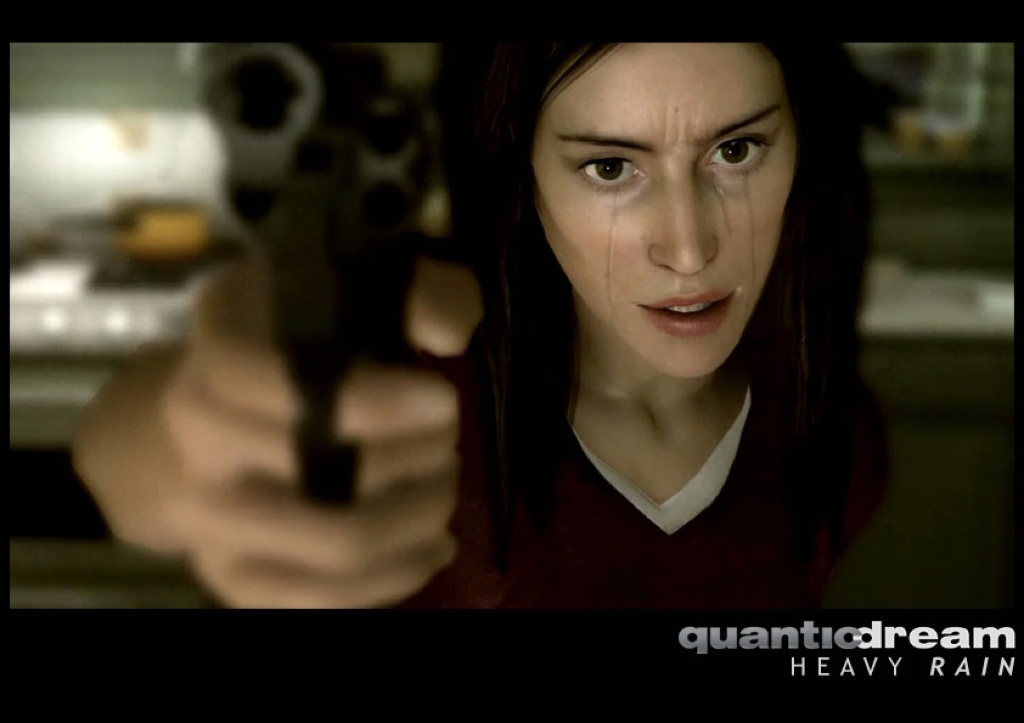 Games are a new, different type of narrative, one that inspires emotion and immersion in ways that no other medium can, and strong interactive stories can not emulate the tactics of film. This was the central theme of "Perfecting the Mix of Story, Character Development, and Interactivity," a panel session held this afternoon, on the second day of the E3 2006.
Mad Doc Software CEO and Founder Ian Lane Davis (Empire Earth 2) moderated a discussion that brought together Quantic Dream founder David Cage (Indigo Prophecy), Ubisoft Manager of Design and Writer Richard Dansky (Tom Clancy series), Sony Computer Entertainment America Game Director David Jaffe (God of War, Twisted Metal), Valve Software Writer and Game Designer Marc Laidlaw (Half-Life series) and Neil Young, Vice President of Electronic Arts Los Angeles (Medal of Honor, Lord of the Rings franchise), to discuss the strongest methods of telling an interactive narrative.
"Maybe there is nothing to figure out," said Jaffe. "I'm starting to lose faith and interest in the whole thing, truth be told." Jaffe feels that story is entirely secondary to good gameplay.
Jaffe came into Sony thirteen years ago with the goal of bringing his love of film into the games industry. Having made God of War, a project done to his exact expectations done his way, he says he no longer feels that the protagonist itself is important, that the story is "distracting" to what makes games inherently compelling.
"I think games are telling crap stories right now," said Young. "I think what we've tried to do in the past is say, okay, let's take the structure of another linear entertainment media, say film, and use that." Living and spending time with an in-game character, Young argues, is the strong point of what could potentially be an interactive story.
"What we're trying to understand is how we paint interactive story comprehension," he continued. That doesn't invalidate games that don't try to do that, that are purely focused on being interactive entertainment. Tetris doesn't use a story. But Nintendogs has one, it's just what the player brings to it, as with The Sims.
"I think a writer is important as a toolset for the player to create his own story," said Richard Dansky. "It has to be there from the beginning, tacking it on the end weakens the internal consistency, and pretty much the entire experience, because there's a feeling that this entire world has been hastily constructed and tacked on." Dansky also argues that a writer should be on a development team on a full-time basis, through the entire development process, doing iterative passes on storytelling, in the same way art and gameplay aspects are done. "If you don't, your game comes out lopsided. It's a very obvious flaw, and it cripples everything you've done."
"I don't think that every single game needs a strong story and characterization," admitted David Cage. His last game, Indigo Prophecy, was almost entirely based on telling a story, but again using Tetris as the opposite example, he says that two types of games can happily co-exist. "I don't think there should be any dichotomy between the two," he said. "But a good story can make you care about what's going on. I played a lot of games that were very good games, and I'd get through the levels, and eventually I find myself asking, 'Why am I doing this?' And this is what a story can do. If you care about the character, you want to help him, and you want to finish the game."
Cage wants to see games with deeper, more mature stories, with one aspect that games in general are missing: meaning ."In this industry there's a real lack of meaning in general," he said ."Most of the time it's a hero fighting against zombies and killing everyone to save his life or whatever. There are so many other great characters and emotions we can use to create an experience. We shouldn't limit ourselves to basic things." Cage is also tired of censorship, which hindered several arguably sexual scenes in Indigo Prophecy. "There are crimes, murder, blood, kids burning…that's all fine. But at one point we had a girl taking a shower, and that was drama with the ESRB. They asked us to put a swimsuit on a girl in the shower. I don't know how you guys in the U.S. take a shower, but in Europe we're usually naked."
With his next title, Heavy Rain, Cage's goal is to give the player the illusion that he is telling a story. He wants to tell narrative in an invisible way. He also hopes to tell it in a more mature way, arguing that censorship restrictions on games should be equal to those of feature films.
Marc Laidlaw says that there's no reason for interactive storytellers to set there sights low. "I think we can emotionally evoke what any other medium can. I've had plenty of experiences playing games where I gasp, which is something I never do reading or watching movies. And that's a really strong emotion to play with."
David Jaffe brought up a scene from the original Half-Life where near the beginning, the player is able to open lead character Gordon Freeman's locker, and find a photo of a baby. That, he says, allows the player to generate his or her own backstory, in a way that isn't overt or distracting from the interactive game. "The stories that work for me when they don't work, are the ones that don't get in the way or fold themselves into the experience." By way of another example, Jaffe revealed that at one point he was developing a first-person shooter. And through the simple addition of adding a wedding ring to the character's hand, he said that the game's focus test players responded overwhelmingly, asking questions about the character's past and showing an active interest.
"I try to start with an archetype," said Cage, on character design. "In Indigo Prophecy, Carla is a sexy girl, but sexy without wanting to be sexy, and really professional. You got the feeling that you know who she is, so you care for her and you start to get involved in the way she behaves and who she is. So I start with the archetype, and try to give depth and backstory to the archetype. And I try to make the story not something you have to endure, but something in the background that you shouldn't notice. I think there are ways that making both work together, gameplay and storytelling, and we're still trying to figure out how." Indigo Prophecy, he says, was his attempt at finding a proper balance between storytelling and gameplay, but admits that there's still a lot of work done to integrate the two.
And essentially, this simple thought mirrors those of the entire panel. Little touches and set pieces without overt explanation seems to be the key to creating an immersive interactive experience. It is the old adage heard in any good writing class: "show, don't tell." In an experience that is interactive, that demands complete immersion from the viewer while requiring a suspension of disbelief arguably higher than in any other medium, it is the duty of the interactive story scribe to give the player enough leg room to fill in the holes by him or herself. After all, what could be more immersive than that?
Autor: Frank Cifaldi
Source: Gamasutra
Labels: E3 2006
The E3 2006 Conference Program: Presenting a lineup of the game industry's top talent
need translation? If you are looking for the single most impressive lineup of game industry speakers, look no further than this year's E3 Conference Program.
Still more than two months away and already the session topics and lineup of speakers mark the 2006 program as one of the very best.
Sims creator Will Wright, God of War lead designer David Jaffe, The Movie' Peter Molyneux, Indigo Prophecy's David Cage, Mortal Kombat creator Ed Boon, Bioware's Ray Muzyka and Greg Zeschuk, Junction Point's Warren Spector, and Half-Life writer Marc Laidlaw are some of the creative talent participating.
From the business development camp, the program includes Lee Jacobson of Midway Games, EA Canada General Manager Alain Tascan, SOE President John Smedley, Pandemic CEO Andrew Goldman, Electronic Arts' Director of Videogame Advertising Julie Shumaker, and THQ VP of Global Business Development Dan Kelly.
As usual, representation from the international community is rich in talent and influence. David Moon of Korea-based NHN is speaking as is Lumines designer Tetsuya Mizuguchi. Nexon Corp.'s Director of International Business Development Calvin Yoo is attending. Ichiro Otobe, Chief Strategist of Square-Enix joins, as does Nexon Senior Manager Chris Lee.
Some of the industry's most influential analysts are joining the program, some for the first time, including Softbank's Craig Cooper, Screen Digest's Ben Keen, Nielsen Vice President Emily Della Maggiora, and Bear Sterns Asia Chief Online Analyst Antonio Tambunan. NPD analysts Anita Frazier and Richard Ow also are participating.
Games represented--by key members of the design team--include Guitar Hero, Need for Speed, Splinter Cell, King Kong, Spore, Second Life, and The Godfather.
Unique this year is the participation of some of business's most influential strategists, included MTV EVP Jeff Yapp, Fox Interactive Media President Ross Levinsohn, and AOL's EVP of Programming and Products, Jim Bankoff.
The list is impressive--and it continues to grow.
Check back often as we update the program with new speakers and sessions. We look forward to seeing past attendees as well as first timers. Register today to take advantage of early-bird pricing.
As you know there will be a new game announced at E3 2006 by Quantic Dream. We still don't know the name, or something more, so we are waiting for this great game conference to know more about this top secret project. Also we interested in Ageia conference at E3. If you remember Omikron 2 will support Ageia PhisX Processor.
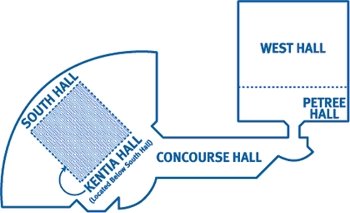 Thursday, May 11, 1:30 PM - 3:00 PM
Room 404AB
An exciting line in the history of game development has been crossed. After years of dialogue and ongoing attempts to deepen plot, build believable characters, and refine programming skills, game designers are now creating interactive experiences that rival a movie's level of depth and engagement. Can a game make you cry? Can it make you believe in a character's mission, in a character's struggle, strengths, weaknesses, and values? Through the inclusion of story specialists--actors, screenwriters, editors, and special-effects experts--games have made spectacular leaps in delivering an immersive experience. The industry's top designers will share the podium with crossover talent from a variety of entertainment arts as they discuss how to create a game that can hold a player's attention for ten to fifty hours, how they invest game characters with emotion, passion, and intelligence, how they build heartbreak, joy, and fear into the story, and what genres are needed in a single title to deliver a satisfying and complete experience.
Moderator: Ian Davis, Ph.D., CEO and Founder - Mad Doc Software, LLC (Empire Earth 2)
Panelists: David Cage, CEO and Founder - Quantic Dream (Indigo Prophecy)
Richard Dansky, Lead Clancy Writer - Ubisoft Entertainment
David Jaffe, Game Director - Sony Computer Entertainment America (God of War)
Marc Laidlaw, Writer/Game Designer - Valve Software (Half-Life, Half-Life 2)
Neil Young, Vice President, General Manager - Electronic Arts - Los Angeles
AGEIA Technologies : Kentia Meeting Room - 7152 /7156 /7158 /7153 /7155 /7157 /7159
Atari, Inc.: Petree - 4003
Whois
CEO and Founder, Quantic Dream (Indigo Prophecy)
David Cage started his professional career in the music industry in 1993. He was one of the first professional musicians in France to create music for video games. In 1997, he founds Quantic Dream to develop a new concept of video game called “OMIKRON-THE NOMAD SOUL”, a futuristic action/adventure title based on original concepts like Virtual Reincarnation. As an early believer in the convergence of media, he convinces famous singer David Bowie to write an original soundtrack for the game and to become the first virtual actor. After collaboration with Microsoft, Cage starts working on a new concept called FAHRENHEIT, initially designed as episodic content. The project is published by Atari in October 2005. Today, David is the creative mind behind Quantic Dream’s titles. Quantic employs 50 full time employees in Paris, France, integrating an infrastructure unique in Europe with an in house Motion Capture set and recording studio. Quantic Dream aims to be a pioneer in creating new forms of interactive experiences based on emotion and interactive storytelling.
Source: E3 Official website
Labels: E3, E3 2006, Physics processor, Quantic Dream
Previous News
- Detroit: Become Human
- Настоящий дефектив. Чем плоха расхваленная Heavy R...
- Beyond: Two Souls review: Beyond awful
- The Dark Sorcerer – a next gen comedy from Quantic...
- The Dark Sorcerer
- QD stories and projects not interesting anymore
- PlayFrance: interview David Cage
- [FJV 2009] Heavy Rain : Interview exclusive P3L de...
- Podcast: Kombo Breaker - Episode 45: Heavy Rain In...
- CVG: Heavy Rain delayed because it "needs space"